
· Hendersonville Tree Service
Tree Care During the Wintertime
Tree Care During the Wintertime
The best winter tree care is done before winter starts: water deeply in the fall, mulch the root zone, wrap young thin-barked trees, and prune out weak or dead limbs before ice and snow arrive. Winter is often the hardest season for trees, with falling temperatures, snow, ice and wind. Trees on your property that are exposed or stand alone need the most protection. There are no guarantees, but the steps below will help limit winter damage.
Around Hendersonville, winters swing between mild spells and hard freezes. A sunny day in the 50s can be followed by a night in the teens, and the higher ridges and north-facing slopes stay colder longer. Ice storms are a bigger threat here than deep snow, because a half inch of ice can add hundreds of pounds to a large limb.
Cold stress and frost cracks
A sudden drop in temperature from day to night can cause frost cracks. These are long vertical splits that run from the outer bark into the wood, usually on the south or southwest side of the trunk where the sun warms the bark during the day. In most cases the tree can seal the crack itself, although it may open again in later winters.
Young trees and thin-barked species such as maples, cherries and many fruit trees are most at risk. A burlap wrap or a light-colored commercial tree wrap from a local nursery can help reduce frost cracking and sunscald, as well as moisture loss. Put the wrap on in late fall and take it off in spring so it does not trap moisture or hide insects through the growing season.
Winter drought
Trees can dry out in winter, especially evergreens. They keep losing water through their needles and leaves on sunny, windy days, but they cannot draw water from frozen ground. Drought damage happens when a tree loses more water than it can absorb. On evergreens it shows up in late winter or early spring as brown needles or leaf edges, often on the side facing the wind. Our post on dealing with winter tree burn covers that damage in more detail.
How do you protect trees from winter drought?
- Water deeply in the fall, especially after a dry summer, until the ground freezes
- On a mild winter day when the soil is not frozen, give young and recently planted trees a slow, deep soak
- Lay down two to four inches of organic mulch over the root zone, kept a few inches off the trunk
- Shelter young evergreens on exposed ridges with a burlap screen on the windward side
Branch breakage from ice and snow
Branches break more easily in winter. As the temperature drops, the wood gets more brittle, and frozen wood cracks under loads it would bend under in summer. Add ice or wet snow and limbs that were already weak give way. White pines, tulip poplars, Bradford pears and other trees with long, heavy limbs or tight forks are common casualties in Henderson County ice storms.
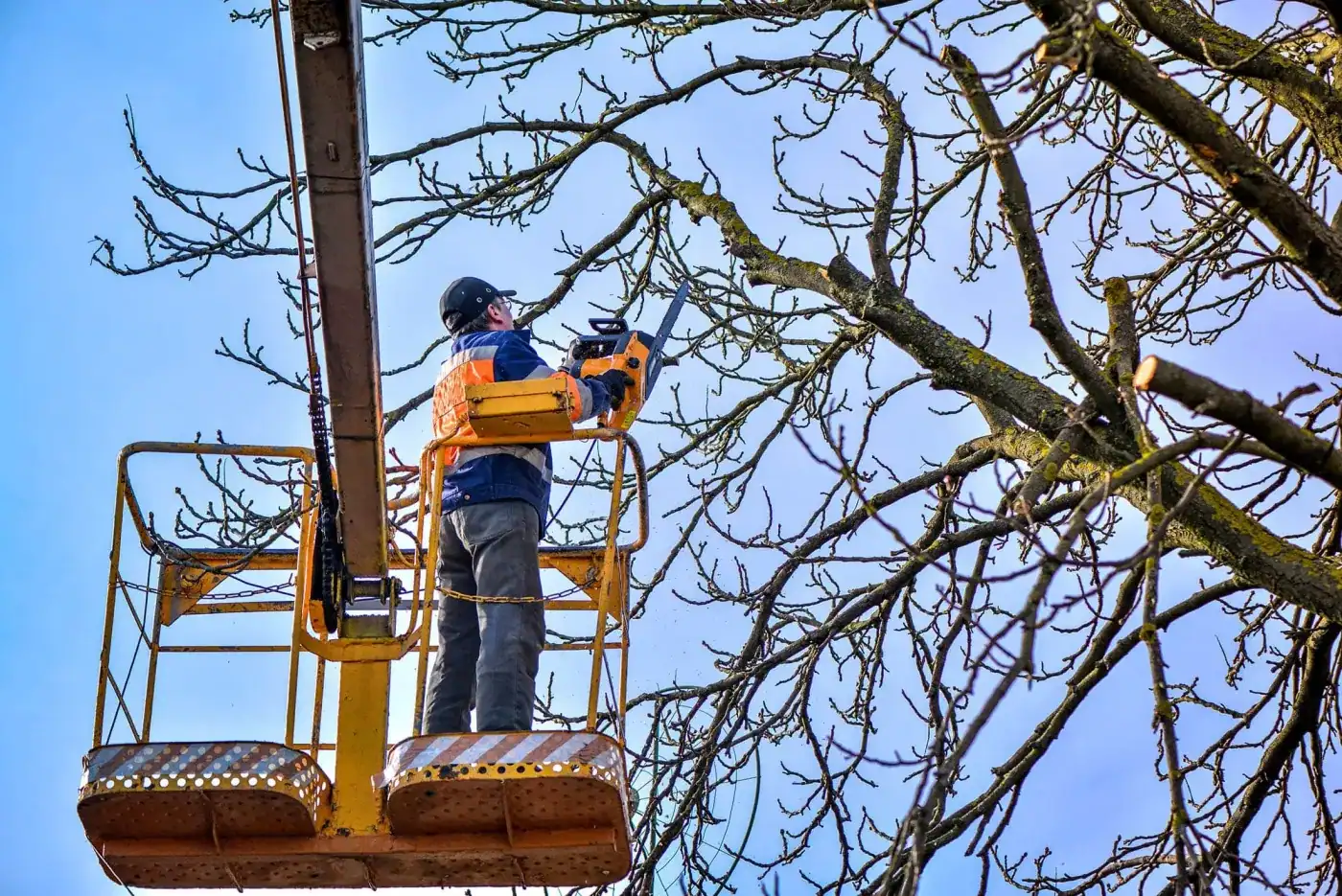
The best defense is proper pruning before winter. Removing weak, rubbing, diseased or dead branches strengthens the tree and reduces the risk to your house, cars and power lines. Our tree pruning page explains how we choose which limbs to remove.
Should you knock snow and ice off branches?
Gently brushing light snow off small shrubs and young trees with a broom is fine. Do not shake or strike limbs coated in ice. Frozen branches snap easily, and falling ice can injure you. Let ice melt off on its own, and stay out from under loaded trees until it does.
Is winter a good time to prune?
For most deciduous trees, late winter is one of the best times to prune. The tree is dormant, most insects and disease spores are inactive, and with the leaves gone it is easy to see the branch structure. Cuts made in late winter begin to close quickly once spring growth starts. Avoid heavy pruning in late fall, when wounds sit open for months. Oaks in particular are best pruned while dormant.
What should you do after a winter storm?
After ice or heavy snow, look for broken limbs still hanging in the crown, split forks and trees that have started to lean. Stay clear of any branch touching a power line and report it to the utility. For damaged trees over a house or drive, our storm damage tree service is available, and our 24/7 emergency line handles trees on structures or blocking access.
Hendersonville Tree Service is family owned and operated and serves all of Henderson County. For winter pruning or a storm cleanup, call +1 (828) 775-6210 or send a message.