
· Hendersonville Tree Service
Tree Cabling & Bracing
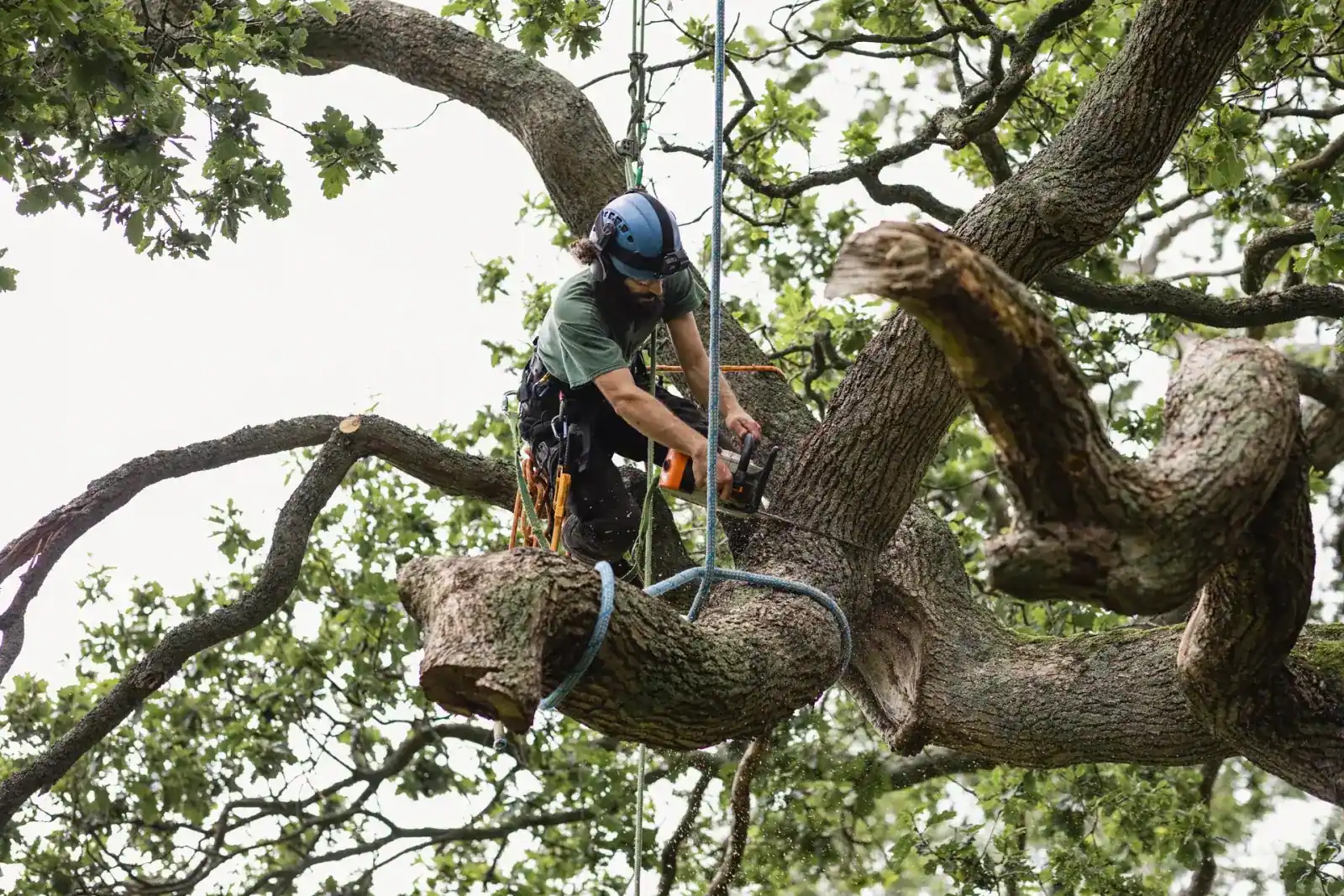
Tree Cabling & Bracing
Tree cabling and bracing are the most common ways to give a tree extra structural support when part of it is at risk of failing. Cables run between limbs high in the crown to limit how far they can move apart. Rods, also called braces, are bolted through the trunk or a fork lower down to hold weak wood together. Used on the right tree, they can keep a valued shade tree standing for years. Used on the wrong tree, they only delay a removal that should happen now.
We never enjoy taking down a tree that could have been kept, but your safety comes first. Too often the call comes after a tree or a big limb has already fallen. For trees that are sound overall but have a weak fork or a heavy limb, cabling and bracing may be an option worth looking at first. Our tree surgery and structural analysis page covers this kind of work.
How do cables and rods work?
A cable is installed about two thirds of the way up between the fork and the tips of the limbs it supports. It is anchored with hardware through the wood, not wrapped around the branches, because a wrapped cable girdles the bark as the tree grows. The cable is set with a little slack so the limbs can still move in normal wind. It only takes the load when a gust, snow or ice pushes them apart.
Rods are threaded steel bars put through the trunk or a split fork, usually lower in the tree. They hold the two sides together where a crack has formed or where a fork is likely to split. Cables can be used alone, but a rod below a weak fork backs up the cable in case of a hard storm.
Prevention, restoration and mitigation
Cabling and bracing are used for three different reasons.
Prevention
The most common use is on a tree that has not failed yet but has a known weak point. A typical example is a tight V-shaped fork with bark pinched between the two stems, called included bark. That bark keeps the stems from growing solid wood between them, and forks like that are prone to splitting. Silver maples, Bradford pears, tulip poplars and some oaks around Hendersonville often grow them.
Restoration
Sometimes a tree has already been damaged but is worth saving. A fork that has partly split in a storm can sometimes be pulled together and rodded, with cables added above to share the load. This only makes sense if the wood is sound and the tree has enough healthy crown left to recover.
Mitigation
On a tree that is important to the property but carries some risk, such as a large old oak near a house, cables can reduce the chance of a limb failure while the owner decides what to do long term. This is not a guarantee, and it is usually combined with pruning to reduce weight on the limbs being supported.
When is cabling not the right answer?
Cabling and bracing cannot save every tree. They are a poor choice when:
- The trunk has extensive decay or a large cavity with little sound wood left
- The roots are damaged or rotted, or the tree has started to lean and lift the soil
- The tree is dying or has lost much of its crown
- The tree is a species with very weak, brittle wood that will keep failing elsewhere
In those cases removal is usually the safer choice, especially where a tree stands over a house, drive or play area. Our post on structural tree defects covers the warning signs, and our hazardous tree inspection page explains how we look at a tree before recommending support or removal.
What maintenance do cables need?
A cabled tree needs checking. Trees keep growing, and hardware that was right for a tree five years ago may be under strain now. Cables can loosen, wear or end up too low as the crown grows. Plan on having the system looked at every few years and after any major wind or ice storm. In the North Carolina mountains, heavy wet snow and ice coating are the loads that test cables most, so a check in the fall before winter is a good habit.
Can I install a cable myself?
Cabling is work done high in a tree with heavy hardware and drills, often from a rope or a lift. A badly placed cable can do more harm than none, by girdling limbs, pulling out of weak wood or shifting stress to a worse spot. Leave it to a crew used to working at height.
Hendersonville Tree Service is family owned and operated and serves all of Henderson County. If you have a tree with a weak fork, a crack or a heavy limb over your house, call +1 (828) 775-6210 or send a message for a free estimate.