
· Hendersonville Tree Service
Commercial Tree Care in Fletcher, NC
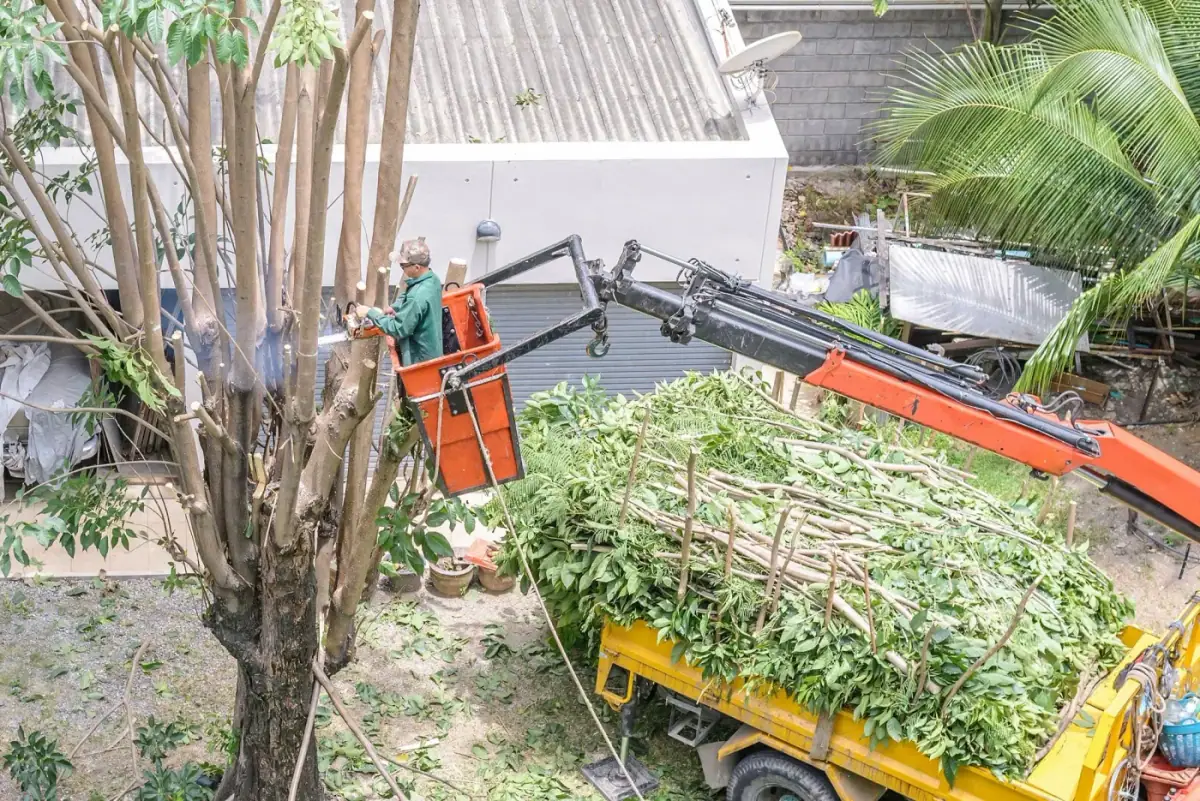
Commercial tree care in Fletcher, NC keeps the trees on a business property healthy and safe for staff, customers and neighbors. Most of the work is routine pruning, deadwood removal and now and then taking down a tree that has declined past saving. If it is planned ahead, it can be scheduled around your opening hours.
Fletcher has a mix of retail along Hendersonville Road, offices, churches, light industrial sites and business parks near the airport and I-26. Many of those properties were built on cleared farmland or wooded lots, so they tend to have two kinds of trees: older oaks, tulip poplars and white pines left standing at the edges, and younger landscape trees planted in islands and along entrances. The old edge trees mostly need deadwood and clearance work, while the young ones need structural pruning and help getting established.
When does a business need a professional tree service?
Call a professional when a tree could hurt someone or damage something if it failed, or when the work needs climbing, rigging or a lift. On a commercial site that covers most tree work. Common reasons business owners and property managers in Fletcher call include:
- Dead or broken branches over parking spaces, walkways or entrances
- Limbs rubbing a roof, gutter, sign or building wall
- Low branches that block sightlines at a driveway or hide signage
- A tree leaning more than it used to, or one with cracks, fungus or hollow sections at the base
- Storm damage after wind or ice
- A tree that has died and needs to come down before it drops limbs
A falling branch landing on a parked car or a person is the outcome everyone wants to avoid. Dead wood in a tall oak or poplar is the most common cause, and it is usually visible from the ground once you know to look for it.
Why tree care matters for a commercial property
Trees add shade, soften parking lots and show that someone is looking after the property. They also carry liability. If a tree that showed clear warning signs drops a limb on a customer's car, or falls onto a neighboring building, the business may be asked to pay for the damage. Regular inspection and pruning is the simplest way to reduce that risk, and it is much cheaper than dealing with a failure after the fact.
There is also the question of appearance. Overgrown trees crowd signs and lights, drop heavy leaf litter into gutters and make a site look neglected. Pruning on a schedule keeps them in proportion with the buildings around them.
What to watch for between visits
You do not need training to spot most problems. Walk the property a few times a year, especially after storms, and look for:
- Hanging or cracked limbs, sometimes called widowmakers
- Bare branches in summer when the rest of the canopy is green
- Mushrooms or conks growing on the trunk or roots
- Soil heaving or cracking on one side of a leaning tree
- Bark falling away in sheets
- Roots cut or buried during paving, trenching or construction
Trees in parking-lot islands deal with compacted soil, heat off the asphalt and very little root space. They often decline faster than trees on open ground, so they deserve a closer look.
How commercial tree work is planned
The difference between commercial and residential jobs is mostly logistics. Before work starts, it helps to agree:
- Which trees and limbs are being worked on, and what the finished result should look like
- Where the truck, lift and chipper will park, and which parking spaces or lanes need coning off
- What time of day suits your business, whether that is early morning, a weekend or a quiet weekday
- How customers and staff will be kept clear of the work zone
- What happens to the wood, brush and any stumps
With that agreed, the crew can work safely and leave the site clean. Our commercial tree service page explains how we scope this kind of work, and if you are unsure whether a tree is safe, a hazardous tree inspection is a sensible first step.
Keeping trees healthy over the long term
Good care stops most problems before they start. Prune young trees early so they form a strong structure. Keep mulch rings around trunks so mowers and string trimmers do not wound the bark. Avoid piling soil, gravel or snow over root zones. Water new plantings through the first couple of summers, since Fletcher can go weeks without rain in July and August.
We work with businesses across Fletcher and the rest of Henderson County. If you manage a property and want a tree looked at, contact us to talk through what you are seeing.