
· Hendersonville Tree Service
Why We Use Tree Chippers
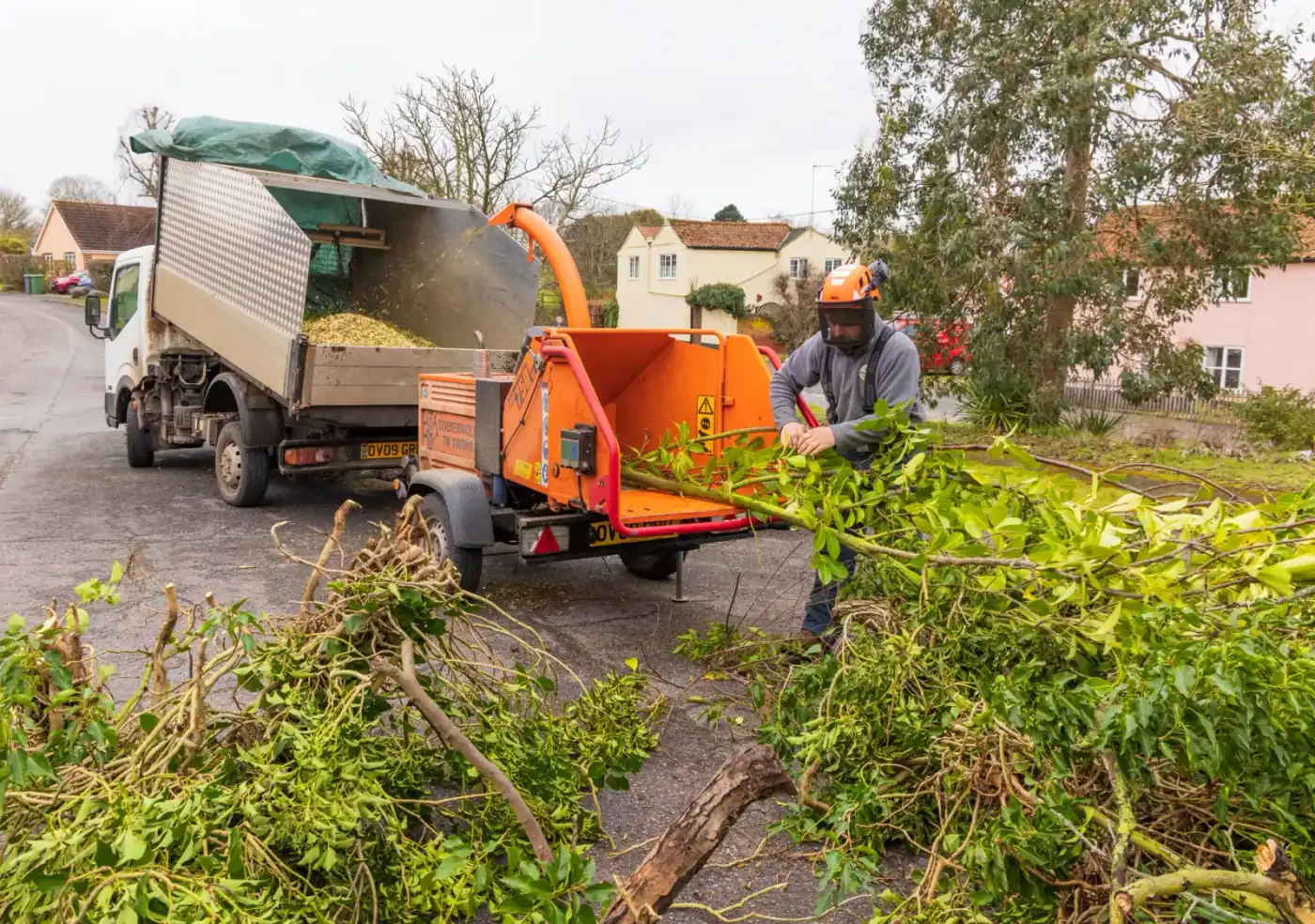
Why We Use Tree Chippers
Tree chippers turn cut branches into small wood chips. On a tree removal or pruning job, that makes the brush far easier to handle. A pile of limbs that would fill several trailer loads can shrink into a fraction of the space once it is chipped, which means fewer trips, less time on your property and a cleaner site at the end of the day.
How does a tree chipper work?
A chipper is a heavy machine, usually towed behind a truck. Branches go into a feed chute, where powered rollers grab them and pull them toward a spinning disc or drum fitted with sharp knives. The knives slice the wood into chips, and a fan blows them out through a discharge chute, usually straight into the bed of a chip truck.
Most chippers handle branches up to a set diameter, often several inches thick depending on the machine. Larger wood, such as trunk sections and big limbs, does not go through the chipper. Those pieces are usually cut into rounds or logs and handled separately.
Why not just haul the branches whole?
Whole branches are bulky, tangle together and take up a lot of room in a truck or trailer. Dragging them across a lawn to the street can also scuff turf and catch on fences and garden beds. Chipping right at the job keeps the brush pile from growing, lets the crew keep the work area clear, and makes the final cleanup much faster. On a large removal, chipping as the work goes can save a second visit just for the brush.
Safety around chippers
Chippers are powerful machines that can pull in anything that gets caught on a branch, including a glove, a sleeve or a person. Crews follow strict habits around them:
- Branches are fed butt end first, and the operator lets go once the rollers take hold
- Workers stand to the side of the chute, out of the path of anything kicked back
- No loose clothing, dangling straps or jewelry near the infeed
- Hearing, eye and face protection are worn while the machine runs
- Short pieces are pushed in with a longer branch, never by hand
Homeowners should keep children and pets well away from the chipper and the work area while the crew is cutting and feeding brush.
Agree on the material handling
Not every part of a tree is processed the same way. Discuss branches, larger logs and existing piles when you request an estimate, so the quote says what will be chipped, what will be cut to length, and what will be removed from the property.
If you want to keep wood for firewood, say so up front and agree on where it should be stacked and how long the pieces should be. Firewood is easiest to handle when cut to a length that fits your stove or fireplace.
Decide what happens to the chips
Some customers want suitable chips left on site. Others want everything hauled away. Confirm the arrangement before work starts, including where any chips should be dumped. A spot near where you plan to use them saves a lot of wheelbarrow trips, but make sure it is somewhere a pile can sit for a while without blocking a drive or smothering lawn.
Chipping within a tree-work job is not automatically a quote for collecting a separate pile you have gathered yourself. If you have a pile of brush from your own yard work, ask about it specifically, along with access and what material is accepted.
Can you use fresh wood chips as mulch?
Yes. Wood chips from tree work make a good mulch for trees and garden beds. Spread them two to four inches deep over the root area and keep them a few inches back from trunks and stems. A layer of chips holds moisture in the soil, keeps roots cooler in summer, evens out soil temperature in winter and slowly breaks down into organic matter.
Fresh chips work best on top of the soil rather than mixed into it. A large pile left for weeks can heat up inside as it starts to break down, which is normal. Spread it out before using it around tender garden beds. Chips from a tree with a known problem in its wood are better hauled away than spread under other trees of the same kind.
See tree removal, clearing and cleanup and mulch considerations for related information, or call Hendersonville Tree Service at (828) 775-6210.